Traditional PPF vs. Peelclear: Which Paint-Protection Approach Fits Your Vehicle?
Traditional paint protection film and Peelclear approach the protective layer differently, so the useful comparison begins with the vehicle, paint condition, desired finish, coverage, and written scope. Conventional clear PPF is generally an adhesive-backed urethane film installed over selected painted surfaces. Peelclear describes its system as a spray-applied, peelable protective paint installed in a professional spray environment. Neither label by itself answers whether the material is appropriate for a particular factory finish, repaint, repair, custom part, or owner goal.
How the two approaches are applied
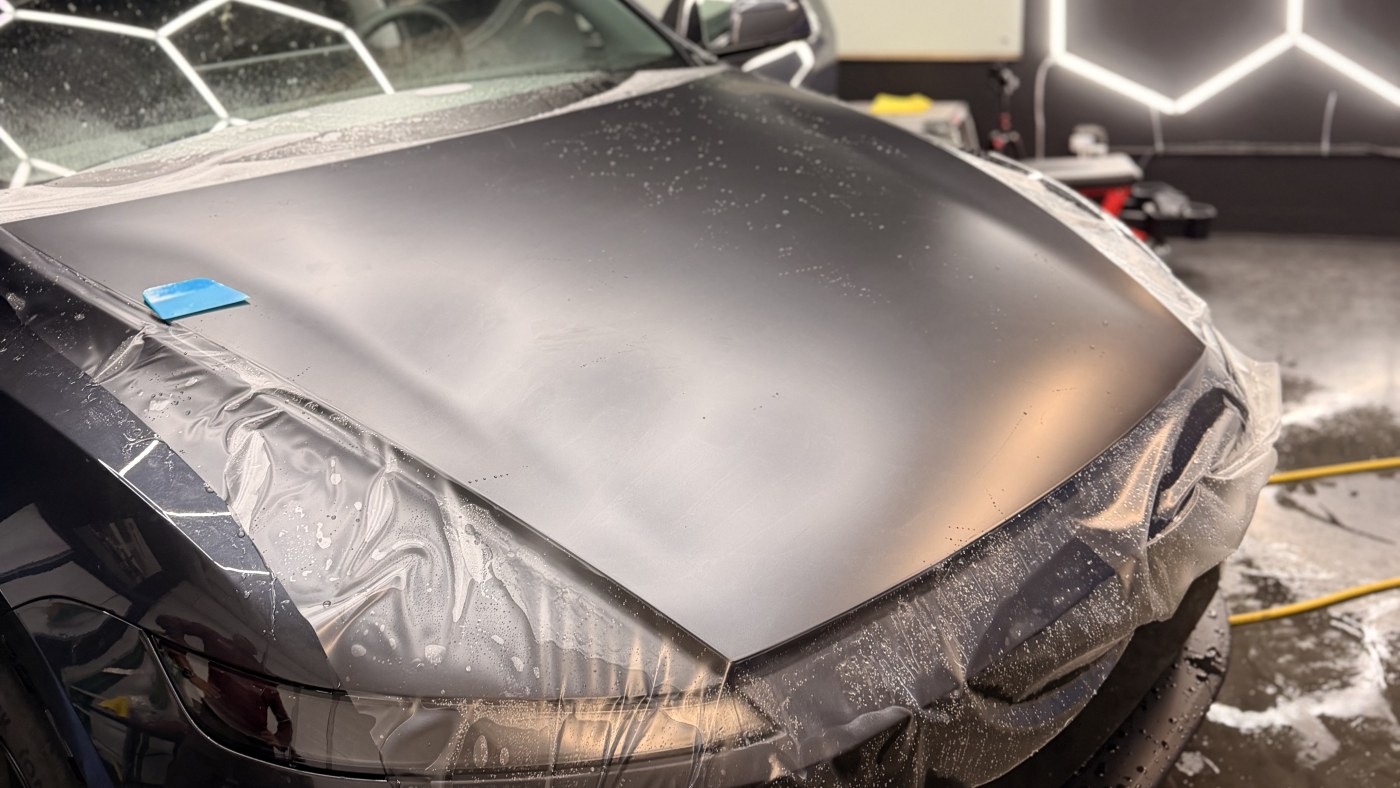
Traditional PPF arrives as sheet material. The installer plans coverage, positions the film, and finishes the boundaries around panels, edges, seams, trim, sensors, and custom parts. Peelclear says its basecoat and topcoat system is sprayed with professional equipment in a booth. That difference changes how owners should discuss boundaries, masking, access, preparation, finish, inspection, repair, and removal.
Coverage and visible boundaries
With adhesive-backed film, ask for a panel map that identifies every included surface and how exposed edges, wrapped edges, seams, relief cuts, badges, trim, sensors, and custom parts will be handled. Peelclear says its spray process can create seamless coverage without adhesive film seams. That is a manufacturer statement, not a universal promise about every vehicle, surface, installer, or completed job. Request the exact masked areas and finish boundaries in writing for either approach.
Finish choices
Traditional PPF is available in different visual finishes depending on the specific film selected. Peelclear's official material describes gloss, satin, and matte options. A finish name should not replace a physical review. Ask how the selected material may affect color, texture, reflections, body lines, repaired areas, adjacent unprotected panels, and future refinishing.
Paint and repaint condition matter
Disclose known repainting, body repair, touch-up, correction, polishing, coatings, old film, adhesive, contamination, chips, scratches, cracks, overspray, loose trim, or custom paint. Mark unknown history as unknown. For both approaches, ask what inspection or test is needed before acceptance, what condition creates an exclusion, and who is responsible if a body or paint specialist must evaluate a surface first.
Installation environment
Both systems require controlled planning, but the work processes are different. Traditional PPF installation depends on clean surfaces, appropriate access, lighting, and control of contamination around the film and vehicle. Peelclear states that its coating is applied in a professional booth with spray equipment. Ask who performs the work, where it occurs, how nearby components are protected, and what quality-control checkpoints are documented.
Thickness and protection claims
Peelclear publishes a claimed applied thickness range of 8-12 mils for its system. Owners should treat that as a product claim and request the current technical and warranty documents for the actual material and installer. A thickness number does not by itself guarantee resistance to every chip, impact, stain, chemical, wash method, or environment. Traditional PPF also varies by product and installed scope, so compare the actual written specifications rather than category names.
Repair and removal questions
Ask what happens when one panel is damaged, repaired, refinished, or replaced. For film, clarify whether the affected panel can be removed and reinstalled separately and how adjacent edges are handled. Peelclear says its material can be peeled away without adhesive residue, but its terms place important limits on product and installation responsibility and do not warrant underlying paint or every removal outcome. Request current written removal instructions, exclusions, and responsibility before choosing either system.
Warranty documents and installer responsibility
Do not rely on a broad verbal warranty description. Ask for the current product warranty, installer workmanship terms, covered conditions, exclusions, claim process, maintenance requirements, transfer rules, and responsible contact. Peelclear's published terms contain exclusions involving underlying paint, workmanship, installation, removal, maintenance, impacts, chips, staining, and other conditions. The exact current documents should control any Peelclear claim.
Maintenance and later work
Before installation, ask how the surface should be washed and maintained, what chemicals or tools are excluded, and what later body, paint, detailing, coating, film, wrap, or accessory work could disturb the protection. Keep the panel map, accepted scope, invoice, supplied material information, care guidance, warranty contact, and condition photographs with the vehicle.
How to compare proposals
Use the same checklist for both options: exact surfaces, preparation, masking or edge treatment, finish, exclusions, paint-history assumptions, inspection findings, installation environment, quality-control checkpoints, current price, schedule, change triggers, maintenance, repair path, removal path, warranty documents, and responsible contact. CDA should confirm current product and service availability in a vehicle-specific proposal rather than through this general comparison.
Frequently asked questions
Is Peelclear the same as traditional PPF?
No. Traditional PPF is adhesive-backed sheet film; Peelclear describes a spray-applied peelable protective-paint system.
Does spray application guarantee no visible boundaries?
Peelclear claims seamless spray-applied coverage, but the actual masked areas, finish transitions, and exclusions should be documented for the vehicle.
Can either system be installed over every repaint?
No universal compatibility claim is made. Disclose the paint history and require inspection and written acceptance.
Which option is better?
The better fit depends on the actual vehicle, paint, coverage, finish, environment, repair and removal plan, documents, and written scope.
Review CDA Auto Styling's current paint protection film service information.

